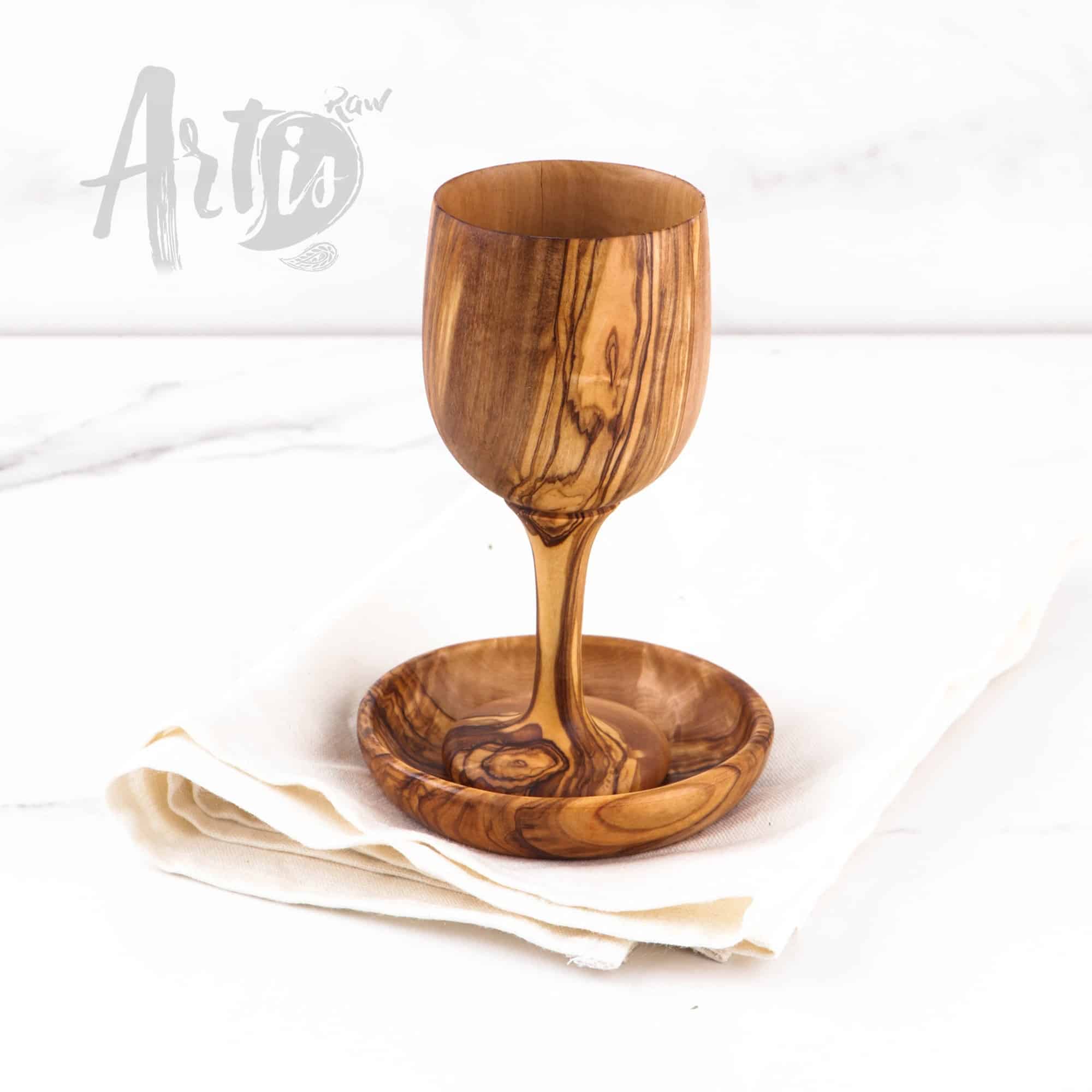
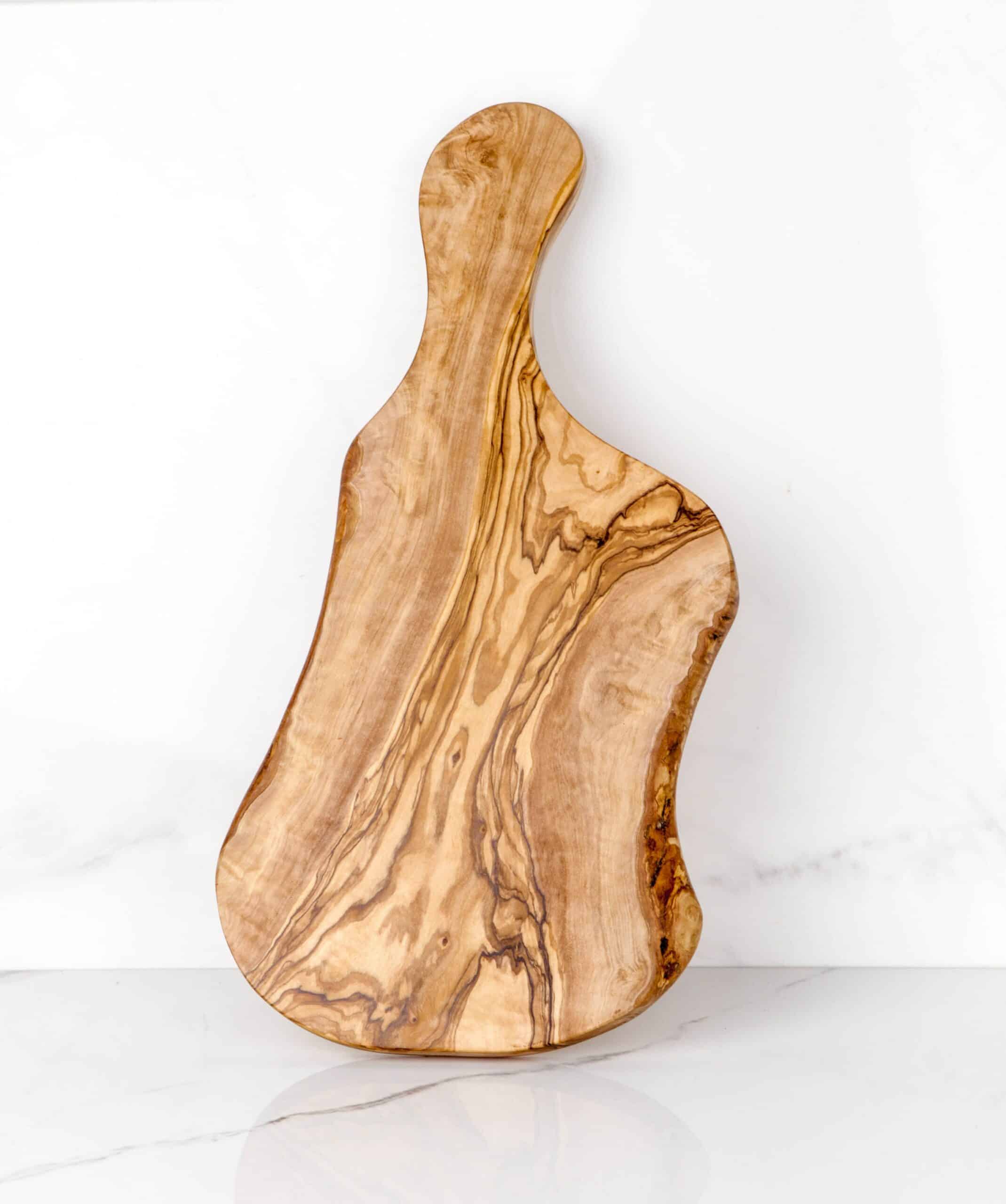
An olive wood cutting board is more than a kitchen tool. Dense grain, natural beauty, and everyday durability make it one of the most rewarding upgrades you can put on your counter — if you choose a real handmade board and care for it well.
Olive wood benefits for a wooden cutting board
People search for olive wood benefits for a reason. Compared with many mass-produced wooden cutting boards, olive wood stands out for:
- Durability — Olive wood is naturally hard and dense, so it stands up to daily chopping without feeling soft or “chewed up” quickly.
- Natural grain — Dramatic honey-to-dark swirls mean no two boards look the same. It stays beautiful left out on the counter.
- Daily use comfort — A solid board feels stable under the knife, gentle on edges, and practical for prep from breakfast to dinner.
- Character you can see — Live edges and organic shapes keep the board feeling handcrafted, not factory-flat.
Worth knowing: A handmade olive wood cutting board is an investment piece. You’re paying for dense timber, finishing, and uniqueness — not a disposable kitchen board.
Durability that earns a place on your counter
Daily cooking is hard on boards: knives, moisture, heat from washed dishes nearby. A well-made olive wood board handles that rhythm when you treat it like wood, not plastic. The density helps the surface resist deep scarring, and the natural oils in the timber support a long working life with simple care.
That durability is why cooks keep coming back to olive wood instead of swapping thin boards every season.
Natural grain: function meets beauty
The grain is the reason an olive wood cutting board doubles as décor. Warm golds, deep browns, and irregular patterns make prep look intentional. Style it with salt, herbs, citrus, or a cheese board and it still looks like a designed object — not clutter.
How to care for your olive wood cutting board
- Hand wash only — Warm water, mild soap, soft cloth or sponge. Never put olive wood in the dishwasher.
- Dry promptly — Wipe dry and stand upright so air can circulate. Don’t leave it soaking.
- Oil regularly — When the surface looks dry or pale, apply a thin coat of food-safe mineral oil or wood conditioner, wipe excess, and let it absorb.
- Avoid extremes — Keep away from long heat exposure and don’t store wet against a sealed counter overnight.
- Refresh the surface — Light marks can often be eased with a gentle sanding and re-oil (if you’re comfortable doing so).
For a broader care guide across utensils and décor, read our article on how to care for olive wood.
Why an olive wood cutting board is worth it
Dense wood + simple care = years of daily prep.
Natural grain turns a utility board into kitchen atmosphere.
Stable, knife-friendly surface for everyday cooking.
A handmade board is memorable for weddings, hosts, and new homes.
Choosing the right board
Look for solid olive wood (not a thin veneer), a finish meant for food contact, and a size that matches how you cook — a compact board for fruit and herbs, a larger one for family prep. At ArtisRaw, boards are handmade so shape and grain vary; that variation is part of the value.